Bengali
 English
 Arabic
 French
 Spanish
 Portuguese
 Deutsch
 Turkish
 Dutch
Dutch
 Italiano
 Russian
 Romaian
 Portuguese (Brazil)
 Greek
Greek
 AirDrop

2. Image to Text Converter
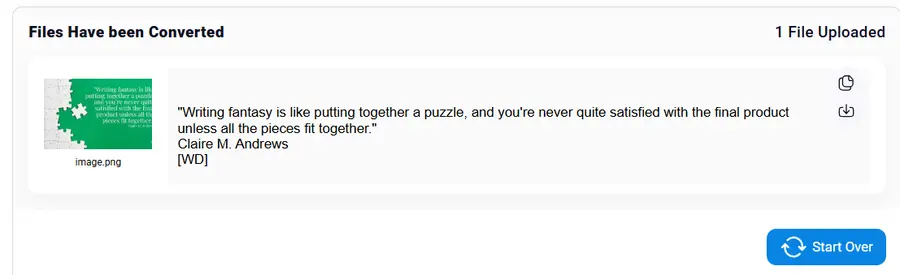
This tool is an excellent option for anyone seeking a user-friendly and precise OCR solution. It supports multiple image formats, including JPG, PNG, and GIF, making it highly flexible.
Once an image is uploaded, the text is extracted almost instantly with impressive accuracy. The tool delivers consistent and reliable results, making it a strong choice for daily use.
For advanced or large-scale needs, premium plans are available. However, for routine tasks, the free version performs exceptionally well.
Best for: Accuracy and ease of use
Strength: Clean interface and reliable output
3. JPG to Text
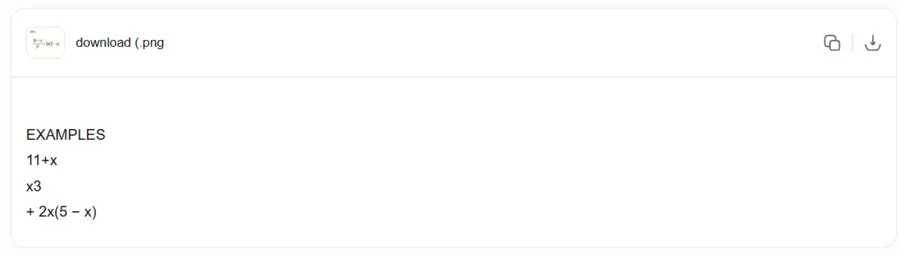
Designed specifically for JPG images, this tool is especially useful for users working with mathematical equations and technical content. It can also handle other image formats efficiently.
One standout feature is the ability to upload multiple images at once, which significantly improves productivity. The tool accurately extracts both regular text and mathematical symbols.
While results are generally excellent, reviewing the output is recommended—especially when working with complex equations.
Best for: Math equations and bulk uploads
Strength: Equation recognition and batch processing
4. Prepostseo Image to Text
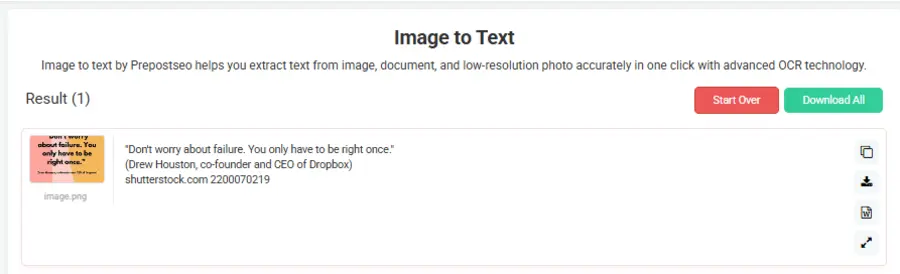
Prepostseo’s image-to-text tool is a great choice for users who need multi-format support without registration. It is completely free and requires no account creation.
The tool uses OCR technology to deliver accurate results and supports various image formats. Its simplicity makes it suitable for students, professionals, and casual users alike.
Best for: Free, no-signup OCR
Strength: Accessibility and format flexibility
5. Editpad Extract Text from Image
EditPad provides a reliable “Extract Text from Image” feature designed to handle different image types, including PNG files. The OCR engine delivers precise and clean output.
If the extracted text contains errors, users can easily edit the content or restart the process to improve results.
Best for: Editable OCR output
Strength: Accuracy with flexibility
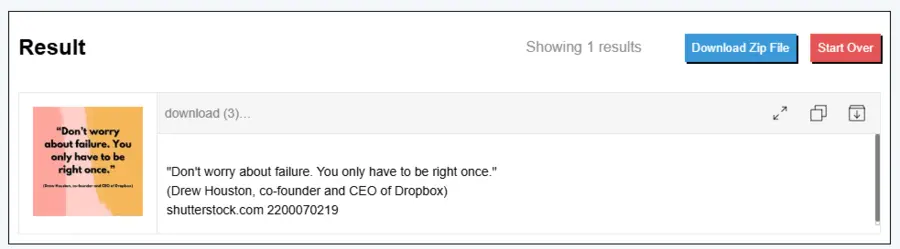
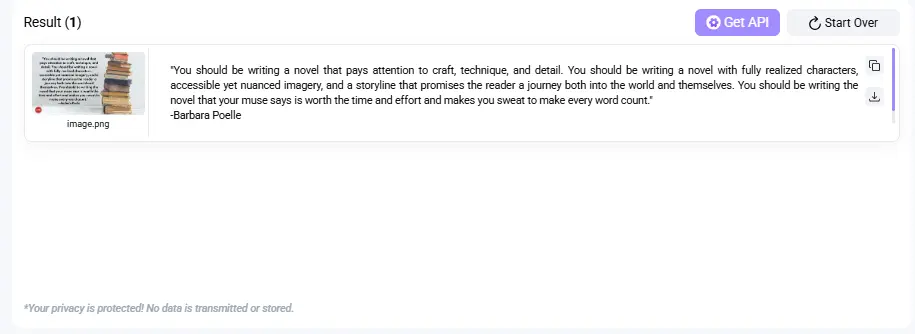
The tool has done a great job. It has efficiently extracted text from the PNG file while ensuring precision and accuracy during extraction.
However, if you feel like the tool has not given a good output or it has mistakes in it. You can edit the output or can “start over” the process to get improved results.
Final Talk
All five image-to-text converters discussed above offer efficient and user-friendly solutions for extracting text from images. Whether you’re looking for a quick, free option or a more feature-rich tool, there’s something for everyone.
Each tool utilizes Optical Character Recognition (OCR) technology to deliver accurate results, though occasional reviews and edits may be necessary to ensure complete precision.
Depending on your needs, you can choose the best tool based on factors like supported file formats, ease of use, and additional features.
Why Image to Text (OCR) Technology Is Non-Negotiable in 2026
OCR is no longer optional—it’s essential.
- Productivity Loss: Employees waste over 14 hours per month manually retyping content from images and PDFs.
- Accuracy Issues: Manual data entry errors cost businesses thousands annually.
- Digital Transformation: Over 70% of workflows now require digitized text, yet many documents remain image-based.
Modern AI-powered OCR tools convert scanned files, photos, screenshots, and even handwritten notes into searchable and editable text within seconds.
How Modern AI Image to Text Converters Work
Understanding OCR technology helps you choose the right tool:
- Pre-processing: Image cleanup (deskewing, noise removal, contrast enhancement)
- Text Detection: AI identifies text regions—even in complex layouts
- Character Recognition: Deep learning models decode characters accurately
- Post-processing: Grammar correction and formatting reconstruction
- Output: Editable text files, Word documents, or searchable PDFs
2026 Advancement: Some tools now use adaptive learning, improving accuracy based on user corrections.
Final Thoughts
All five image-to-text converters discussed above offer fast, reliable, and user-friendly OCR solutions. Whether you need a quick free tool or a feature-rich converter, there’s an option for everyone.
While OCR accuracy is impressively high, reviewing the extracted text is always a good practice—especially for critical documents.
Choose the tool that best matches your workflow based on accuracy, file support, ease of use, and advanced features.